Green Libraries
A Website for Information about Green and Sustainable Libraries
Green Libraries
monika
USA Green Libraries Directory H - N
Libraries are arranged alphabetically within each designation.
Entry format:
Name of library (URL). City, State Abbreviation.
Description highlights. If available building information URL.
Harper Woods Public Library. HARPER WOODS, mi
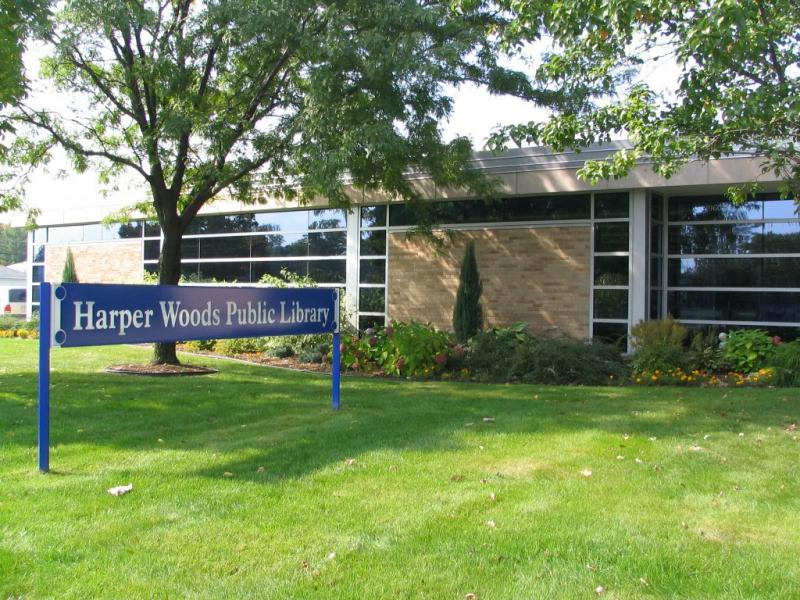 Opened in October 2005 after extensive renovation and expansion. It is the first public library in Michigan to receive certification from the U.S. Green Building Council. During construction 87% of existing building structure was reused, 45% of materials were manufactured within 500 miles, and 91% of construction waste was diverted from landfills. Insulation in the roof and walls was increased by 300%. Water consumption was reduced by 50%, saving 100,000 gallons per year. Received LEED Silver certification. Building information: http://www.libcoop.net/harperwoods/leed_brochure.htm
Hayden Library, Massachusetts Institute of Technology. Cambridge, MA
Features solar panels on the roof generating 15,000 kilowatt hours of electricity per year. Building information: http://web.mit.edu/newsoffice/2004/solarpower.htmlHighland Sam J. Racadio Library & Environmental Learning Center. Highland, CA
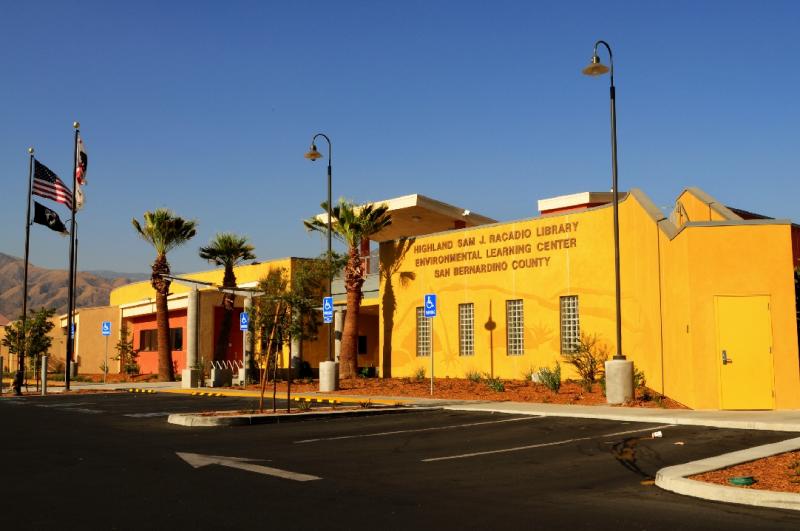
This state-of-the-art library is the first combination library/environmental learning center in the United States. The facility includes a rooftop garden, amphitheatre, and flora and fauna exhibits. It has an Environmental Learning Center where, through interactive displays, children can see animals and insects such as chinchillas, iguanas and Madagascar hissing cockroaches. The facility is built with 28% recycled or reused materials, provides extensive use of natural light, and uses a rooftop landscape as natural insulation. Gardens are used to grow food for a number of the animals housed in the critter area of the ELC. Received LEED Gold certification. Building information: http://www.library.ca.gov/lba2000/funded/highland.html
Imaginon. Charlotte, NC
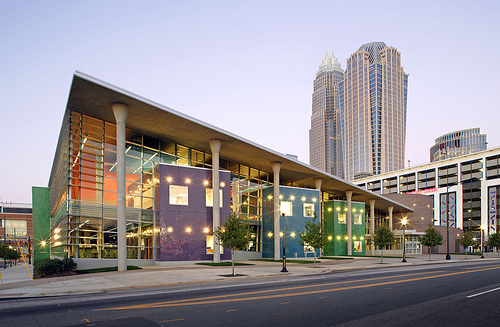 ImaginOn is a collaborative venture of the Charlotte Mecklenbury Library and Children's Library of Charlottee. ImaginOn brings stories to life through extraordinary experiences that challenge, inspire and excite young minds. In spring, 2005 the facility was recognized by the Mecklenburg County Recycling Program for its outstanding commitment to keeping green throughout the construction process. RodgersHardin, the general contractor for ImaginOn, recycled 100% of the waste generated during the demolition phase and 82% of the construction waste. Concrete, wood, drywall, metal, and paper were all sorted onsite and recycled locally. Construction and demolition debris accounts for an estimated 1/3 of the overall waste stream in Mecklenburg County. In 2006, ImaginOn was awarded Silver LEED certification. Building information: http://www.imaginon.org/pdfs/archFacts01.pdf
Jay Johnson Public Library. Quinter, KS
The interior design of the library includes a wheat board front desk and office fixtures. (Wheat board is constructed from wheat and is a locally grown resource.) A 3kw photovoltaic system was installed on the south facing roof. The library has east and south facing windows for morning and winter sun, and no west or north facing windows to limit exposure to cold winds. Compact and energy efficient tubes, as well as reading lamps were installed to decrease the amount of energy used by light fixture. Even though library addition almost doubled its size electrical use did not increase. Building information: http://www.quinterlibrary.org/facilityKilton Public Library. West Lebanon, NH
The Library is composed of structural steel and metal decking. The interior has sensors that evaluate daylight, and adjust the lighting and shades used in the building. The building includes a geothermal system and a wood pellet boiler which coordinates with the sensors to optimize the energy used for heating and cooling. Non-toxic materials such as paints and sealants, carpets and wood were used throughout the building. In 2011 the Library received an Honorable Mention Award as one of Library Journal’s 2011 New Landmark Libraries. The Kilton Public Libary is the first LEED Gold new library in New Hampshire. Building information: http://www.ifla.org/files/library-buildings-and-equipment/Conferences/Session%204d%20-%20Hoover%20-%20New%20Landmark%20Library%20-%20Kilton.pdf
Lake View Terrace Library. Lake View Terrace, CA
Over 75% of construction was diverted from landfills to local recycling facilities. The building is made out of high-mass concrete masonry units (CMU). Building features include low-flow automatic faucets, window glass with double glazing, automatic motorized windows that let out warm air and bring in cool air, and bamboo wood flooring. Energy performance is over 40% more efficient than California standards. The Library was chosen as an American Institute of Architects Top Ten Green Project for 2004. Received LEED Platinum certification.
Building information: http://www.lapl.org/branches/62-eco_info.pdfMadison Central Public Library. Madison, WI
Madison Central Public Library was awarded the American Public Works Association Project of the Year 2014 and is currently pursuing LEED Gold Certification. Prominent sustainability features include a green roof, nine solar panels, an in-floor HVAC system, radiant heating/cooling floors, magnetic bearing chillers, and a high-tech computerized system that live tracks energy usage and efficiency. Additionally, the renovation project itself received a lot of attention. Close to 90% of the previous structure was reused for the renovation of the new library, diverting 3,500 tons of scrap material from local landfills. In addition, one of the greatest achievements of the project was expanding the space by more than 26% while simultaneously projecting a 43% improvement in overall energy efficiency. Building information: http://www.madisonpubliclibrary.org/greenMalletts Creek Branch, Ann Arbor District Library. Ann Arbor, MI
Features solar heating, a vegetated green roof and convection cooling. Uses renewable building materials, and a storm water management system that incorporates native plants and grasses. Opened in 2004 the branch later went on to win the Michigan AIA Award for Sustainable Architecture and the Huron Valley AIA Chapter for Sustainability. Building information: http://www.aadl.org/aboutus/mallettscreek/sustainabilityMartha Riley Community Library, Roseville, Public Library. Roseville, CA
 The Martha Riley Community Library opened in December 2007. It was designed for joint building use with Utility Exploration Center a hands-on museum dedicated to raising awareness of environmental issues. Various construction features include: recycled water used in the evaporative cooling system, cork flooring used because of its regenerative nature, low-emissivity (Low-E) windows which reduce cooling costs by up to 40% by including a microscopic thin metallic layer that reduces heat transfer from the exterior to the interior of the building, bird seed laminates on cabinets, low VOC paint, recycled glass countertops and wall tiles, and the use of carpet squares to reduce the need for whole carpet replacement. In addition, building furnishings are made with recycled products. The building is designed to save the City of Roseville over $1.8 Million in reduced operating costs over the life of the building. . Awarded Silver LEED rating initially and received October 2009 a Gold LEED rating. Building information: http://www.roseville.ca.us/news/displaynews.asp?NewsID=1703&targetid=1
Minneapolis Central Library. Minneapolis, MN
Features energy-efficient design, three green roofs, and a storm water management system. Building information:http://www.mplib.org/greenroof.pdfWesthampton Public Library. Westhampton Beach, NY
Using dual flush toilets and ultra low flow faucets the building reduced potable water usage by 45%. Currently the Library generates 8.1% of its energy by using photovoltaic panels. The building optimized its energy performance by incorporating an improved thermal envelope, efficient lighting, demand control ventilation, occupancy sensors and high-efficiency HVAC units which resulted in a 34.8% energy cost savings. Over 31% of total building material content had been manufactured using recycled material and when constructed 95% of on-site construction waste was diverted from the landfill. Approximately 45% of total building material were extracted, recovered or manufactured within 500 miles of the project site. The Library received an honorable mention in Library Journal's 2011 New Landmark Libraries. The Westhampton Public Library received LEED Gold Certification in December 2010. Building information: http://www.westhamptonlibrary.net/pages/building.aspx
North Adams Public Library. North Adams, MA
In 2007 the North Adams Public Library became the first public library in Massachusetts to become LEED certified. The building project renovated its existing Victorian building which expanded the building by an additional 10,876 square feet for a completed size of 27,270 square feet. The library received a grant from the Massachusetts Technology Collaborative for $175,000 which enabled the library to install a 9.6 kW array, and two geothermal wells for heating a cooling. Using LEED guidelines the building also included energy efficient lights, daylight and occupancy sensors, Co2 monitoring, roof insulation of R30, wall insulation of R33, water efficient landscaping, building and resource reuse, used local/regional materials, a construction management plan, and low-emitting materials. Received LEED certification. Building information: http://www.naplibrary.com/NAPLgreen.htm
Green Libraries
monika